How Does a Commercial Signage Project Work? From Planning Through Installation
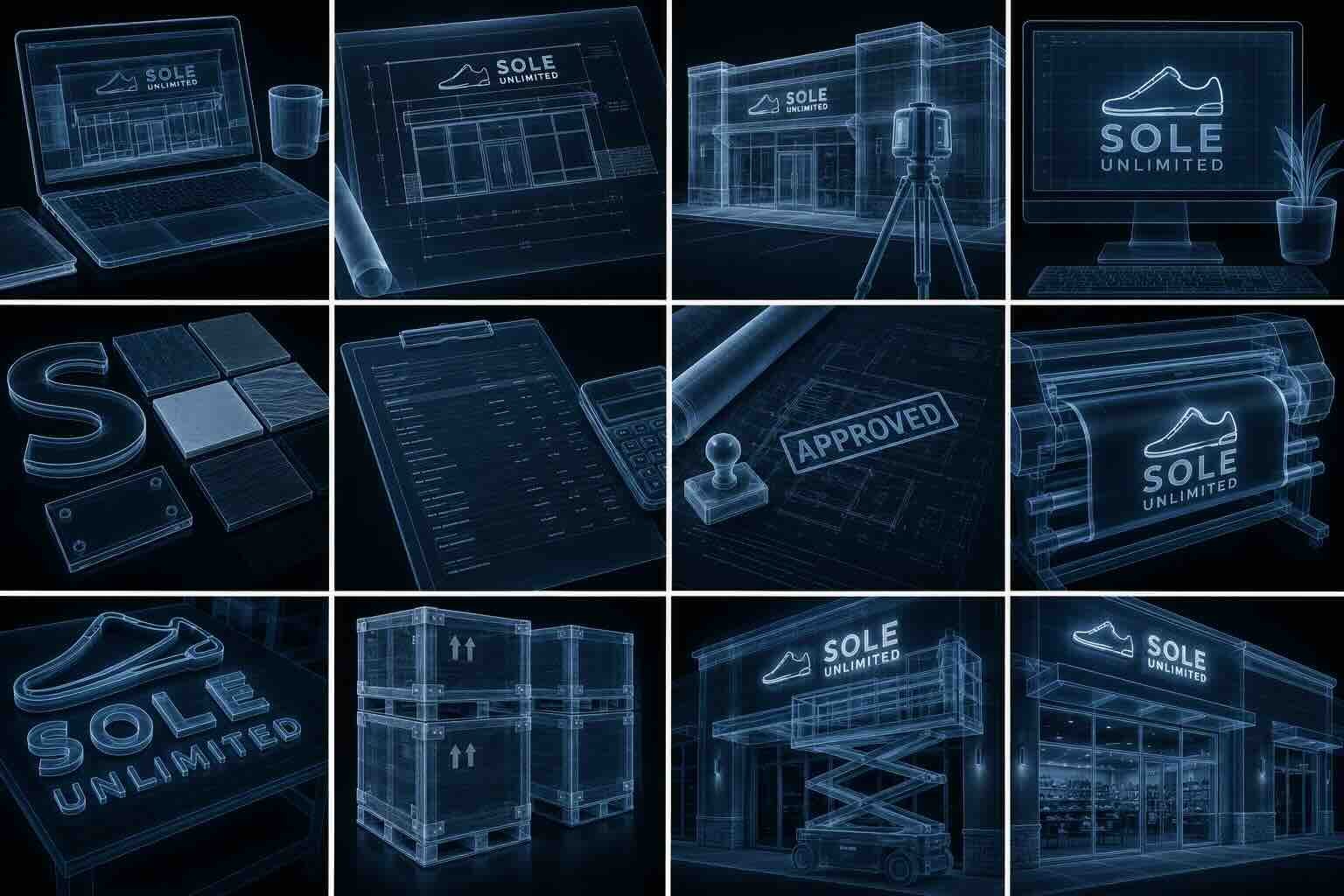
Commercial signage projects can involve much more than designing a sign and installing it on a building. Depending on the project, the process may include site surveys, architectural drawings, artwork development, material selection, permitting, fabrication, large-format printing, logistics, installation, and coordination with construction teams.
Understanding this process early can help businesses establish realistic schedules, provide the correct project information, and avoid unnecessary delays.
Here at Wallsticker, we work with retail brands, businesses, architects, designers, general contractors, construction managers, property managers, and marketing teams on commercial signage and graphics projects nationwide.
Some clients need assistance with the entire process. Others already have approved designs, architectural plans, or fabrication specifications and only need production or professional installation.
Our role can be tailored to the requirements of the project.
This guide explains the typical stages of a commercial signage project from initial planning through final installation.
1. Project Planning
Every successful signage project starts by defining what needs to be accomplished.
The initial project scope may include:
Exterior building signage
Interior signage
Dimensional letters and logos
Channel letters
Blade signs
ADA signage
Wayfinding
Window graphics
Wall graphics and murals
Vehicle graphics
Temporary promotional signage
Multi-location signage programs
At this stage, it is helpful to establish the project location, signage types, approximate quantities, desired appearance, intended use, timeline, and any known construction or installation requirements.
For a retail build-out, for example, signage may need to coordinate with architectural plans, landlord requirements, electrical work, storefront construction, interior finishes, and the planned store opening date.
The earlier these requirements are identified, the easier it is to coordinate the project.
2. Gathering Project Information
Once the general scope is established, the project team begins collecting the information needed to evaluate the work.
Useful information may include:
Project address
Photographs
Measurements
Architectural drawings
Elevations
Sign schedules
Brand guidelines
Artwork
Material specifications
Quantities
Installation requirements
Construction schedules
Target completion dates
Clients do not need to have every item before contacting Wallsticker.
Our team can review the information available and help identify what may still be required.
For straightforward projects, photographs, measurements, and artwork may provide enough information to begin estimating.
More complex projects may require architectural documentation, field verification, permitting research, or additional technical information.
3. Site Survey & Field Verification
When accurate field information is unavailable, a professional site survey may be recommended.
A site survey can document information such as:
Wall dimensions
Window dimensions
Existing signage
Installation surfaces
Mounting conditions
Installation heights
Electrical conditions when applicable
Access conditions
Site photographs
Potential obstacles
For new construction, architectural drawings may provide much of the initial information needed for estimating and planning. Critical dimensions can then be field verified at the appropriate stage of construction before fabrication when necessary.
For existing locations, a survey can document actual conditions before design or production begins.
Wallsticker can coordinate professional site surveys as a separate service for projects that require verified field information.
4. Design & Artwork Development
Once the project requirements and dimensions are understood, artwork can be prepared.
Some clients already have professional designers, architects, branding agencies, or internal marketing departments that provide completed artwork.
In those cases, Wallsticker can work from client-supplied production files.
Depending on the project, useful files may include:
Adobe Illustrator files
EPS files
Vector PDFs
SVG files
High-resolution raster images
Brand guidelines
Architectural drawings
Vehicle templates
Other clients need assistance translating their brand into a physical environment.
Wallsticker also provides professional design services for projects including commercial signage, environmental graphics, wall murals, window graphics, and vehicle graphics.
With more than 20 years of experiential design experience, our design team understands that artwork for a physical space requires considerations beyond what appears on a computer screen.
Scale, viewing distance, architecture, materials, fabrication methods, and installation conditions can all affect how a design should be prepared.
5. Material & Fabrication Recommendations
Once the design direction is established, the appropriate materials and fabrication methods need to be determined.
There is no single material that is correct for every signage project.
Material selection may depend on:
Interior or exterior use
Installation surface
Expected service life
Weather exposure
UV exposure
Required appearance
Sign dimensions
Illumination
Mounting method
Removal requirements
Project budget
Depending on the application, materials may include acrylic, aluminum, PVC, vinyl films, specialty graphic films, aluminum composite materials, fabrics, laminates, LEDs, and other architectural signage components.
For printed graphics, adhesive characteristics can be particularly important.
A temporary promotional window graphic intended to remain installed for several weeks should not automatically be approached the same way as a long-term exterior graphic.
Our production and fabrication technicians evaluate materials according to the actual application and project requirements.
6. Estimating & Project Proposal
Once enough information is available, a project proposal can be prepared.
Depending on the scope, pricing may include:
Design
Site survey
Printing
Materials
Fabrication
Hardware
Electrical components
Permitting
Engineering when required
Shipping
Freight
Installation
Equipment
Existing signage removal
Complex commercial projects may be broken into separate line items so the client can understand the different components of the work.
If project information changes after the estimate is prepared, pricing may also need to be revised.
For this reason, accurate dimensions, quantities, materials, artwork, and installation conditions are important when preparing a final project quote.
7. Proofing & Client Approval
Before production begins, the project should be reviewed and approved.
Proofs help confirm important information such as:
Artwork
Dimensions
Quantities
Colors
Materials
Sign locations
Graphic orientation
Copy
Logos
Production specifications
The approval stage is important because changes become more difficult and costly once fabrication or printing begins.
Clients should carefully review proofs rather than relying only on previous design files or email discussions.
For larger projects, approval may involve multiple stakeholders, including the brand, architect, general contractor, property manager, landlord, or construction team.
8. Permitting & Property Approvals
Certain signage projects require approval before fabrication or installation can proceed.
Depending on the project, this may involve:
Municipal sign permits
Electrical permits
Landlord approval
Shopping center criteria
Comprehensive sign plans
Architectural review
Engineering
Property management approval
Requirements vary significantly by jurisdiction and property.
An exterior sign permitted in one city may be subject to different requirements in another city.
For multi-location retail programs, each location may therefore require separate review.
Permit and property approval schedules should be considered early because they can affect the overall project timeline.
9. Printing & Fabrication
After artwork, specifications, and required approvals are complete, the project can move into production.
The exact process depends on what is being produced.
Printed graphics may involve:
High-definition large-format printing
Lamination
Cutting
Contour cutting
Paneling
Finishing
Packaging
Fabricated signage may involve:
CNC routing
Acrylic fabrication
Metal fabrication
Painting
Dimensional construction
LED components
Electrical assembly
Mounting hardware
Custom finishing
Final assembly
Our production and fabrication technicians work from approved specifications so that the finished components correspond with the intended design and installation requirements.
10. Quality Control
Before a project leaves production, the completed signage or graphics should be checked against the approved project information.
Depending on the project, quality control may include reviewing:
Dimensions
Quantity
Artwork
Finishes
Graphic orientation
Color
Fabrication
Hardware
Electrical components
Packaging
Location identification
Multi-location programs require particular attention to organization.
Individual signs and graphics may need to be labeled, packaged, and assigned to specific locations so that installation technicians receive the correct components for each site.
11. Shipping & Logistics
Not every project is fabricated in the same market where it will be installed.
Commercial signage may need to be packaged, crated, shipped, or freighted to the project location.
Logistics can become especially important for nationwide programs involving multiple locations and installation dates.
Planning may include:
Packaging
Crating
Freight
Tracking
Delivery appointments
Site receiving
Temporary storage
Installation sequencing
The objective is to have the correct materials arrive at the correct location in coordination with the installation schedule.
12. Installation Scheduling
Professional installation requires coordination before technicians arrive at the site.
Our project team may need to confirm:
Installation date
Site contact
Installation address
Building access
Work hours
Security requirements
Loading access
Parking
Equipment
Installation surfaces
Site readiness
Construction status
For active retail environments, installation may need to take place before opening, after closing, or during another approved work window.
For construction projects, installation should be coordinated with other trades so that signage is not installed before the supporting surfaces or electrical work are ready.
13. Professional Installation
Once the site is ready and the materials are available, the project moves to installation.
Depending on the scope, Wallsticker installation technicians may be working with:
Fabricated signage
Dimensional letters
Window graphics
Wall graphics
ADA signage
Wayfinding
Interior branding
Exterior signage
Vehicle graphics
Professional installation involves more than physically attaching the finished product.
Technicians may need to interpret drawings, confirm placement, work around architectural conditions, properly align graphics or signage, use specialized tools and equipment, and coordinate with the client or construction team while on-site.
Installation conditions should match the information used during project planning whenever possible.
If unexpected site conditions are discovered, additional coordination may be required before work can be completed.
14. Completion Documentation
For many commercial projects, especially multi-location programs, completion documentation is an important final step.
This may include:
Installation photographs
Completed location confirmation
Field notes
Punch-list documentation
Identification of unexpected site conditions
Completion photography is particularly useful for clients managing projects remotely.
It allows marketing, construction, and project teams to verify completed work without having someone from the corporate team physically present at every location.
15. Managing Multi-Location & Nationwide Projects
A signage project involving 20, 50, or 100 locations requires additional coordination compared with a single-site installation.
The overall process remains similar:
Planning → Survey → Design → Approval → Production → Logistics → Installation
However, each location may have different:
Measurements
Architectural conditions
Permit requirements
Installation conditions
Construction schedules
Opening dates
The goal is to standardize what can be standardized while properly documenting site-specific differences.
Wallsticker works with commercial clients nationwide and can assist with coordinating design, production, surveys, fabrication, logistics, and professional installation across multiple markets.
How Long Does a Commercial Signage Project Take?
There is no universal timeline for commercial signage.
A straightforward printed graphics project may move through production relatively quickly, while custom fabricated exterior signage requiring permitting and engineering can require considerably more time.
The schedule may be affected by:
Design
Client approvals
Site surveys
Permitting
Engineering
Material availability
Fabrication complexity
Quantity
Shipping
Construction readiness
Installation scheduling
If you have a required opening date or project deadline, tell the Wallsticker Team as early as possible.
Working backward from the required installation date helps determine when approvals, field measurements, production, and other project milestones need to occur.
When Should Wallsticker Become Involved?
Ideally, involve our team early.
This does not mean fabrication needs to begin immediately.
Early involvement allows signage requirements to be considered while there is still time to coordinate them with branding, architecture, construction, electrical requirements, and the overall project schedule.
For new retail construction in particular, early signage planning can help identify issues before the site reaches the final stages of the build-out.
For existing locations, contacting our team early provides time to obtain measurements, review artwork, select materials, produce the project, and schedule professional installation.
You Don't Need to Have Everything Figured Out Before Contacting Us
One of the most important things to understand about the commercial signage process is that you do not need to arrive with every technical detail already determined.
Some clients provide complete construction documents and production specifications.
Others contact us with photographs and an idea.
Both are valid starting points.
The Wallsticker Team can review the information available, identify what is missing, and help establish the appropriate next steps.
Our goal is to make the technical side of the project understandable while working effectively with the professional teams already involved.
Planning a Commercial Signage Project?
Whether you're planning a single commercial location, a retail build-out, a rebranding project, or a nationwide rollout, the Wallsticker Team can assist with all or selected portions of the process.
Send us your available artwork, architectural drawings, measurements, photographs, project locations, and schedule. If you are still early in the planning process, we can help identify the information needed to move forward.
Contact the Wallsticker Team today to discuss your project and request a free quote.